Identity is such a strange thing. I’ve spent so much of my life trying to figure out mine. Where do I fit? Who do I “go” with? Who am I? What is my place in the world?
Identity isn’t simple. No one is just one thing. We are many things to many people, and we are many things to ourselves. Some pieces are bigger than others. There are parts of our identity that are more comfortable to sit in, that feel more authentic than others.
And right now, I am struggling a little because a big part of my identity has changed. A big part of who I am is different now.
Today, my mom asked, “Do you still have congenital heart disease?”
And I guess the answer is no. But also, both.
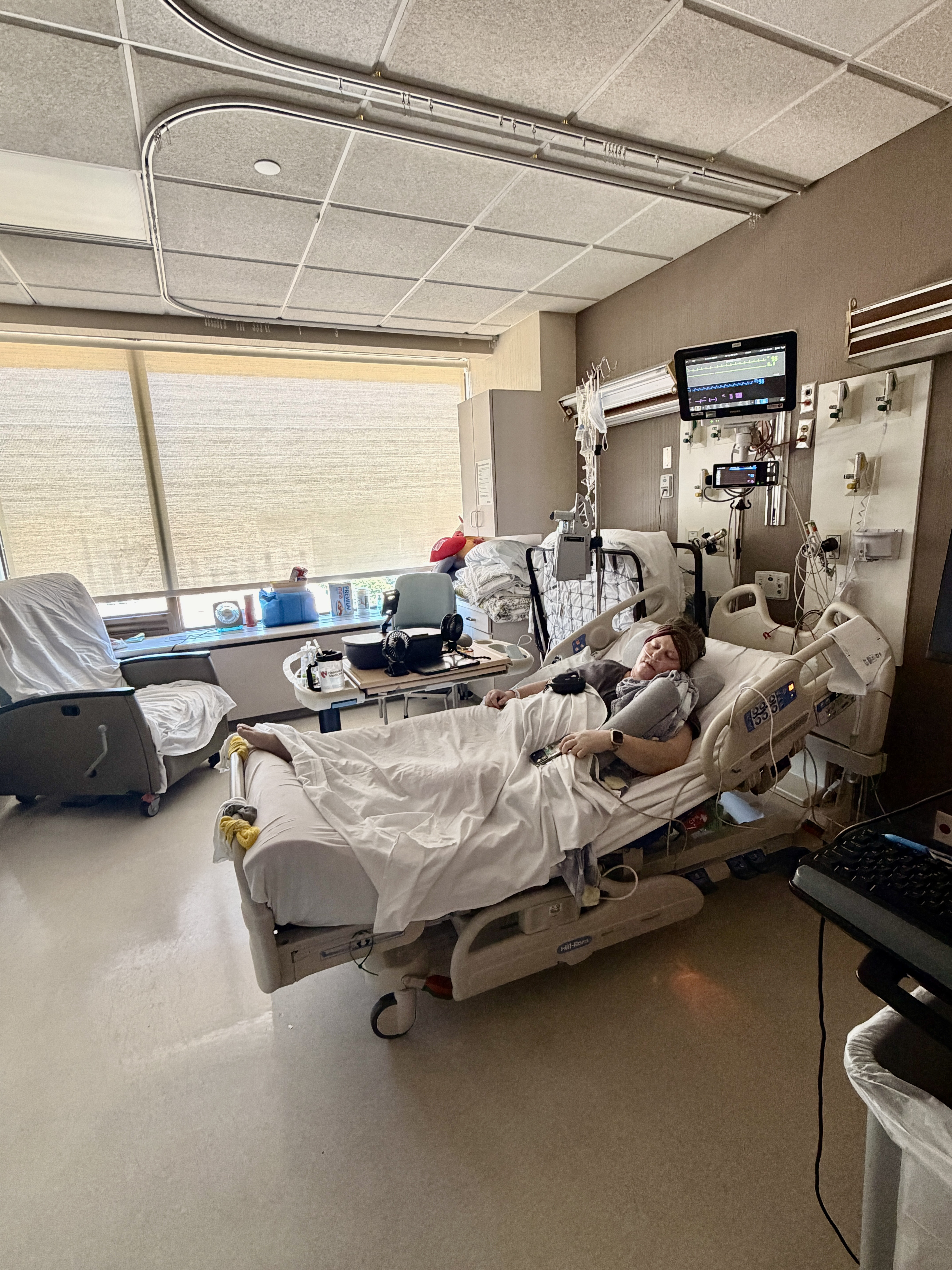
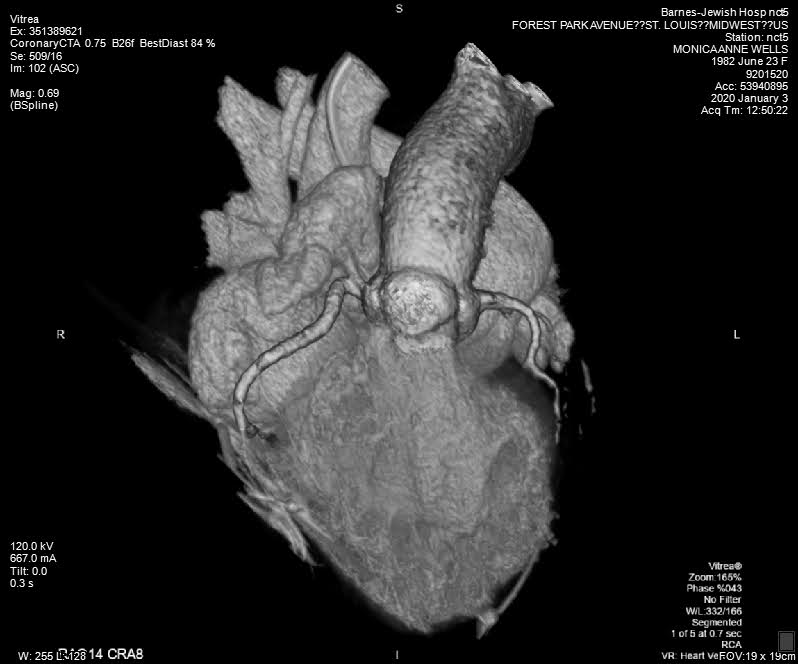
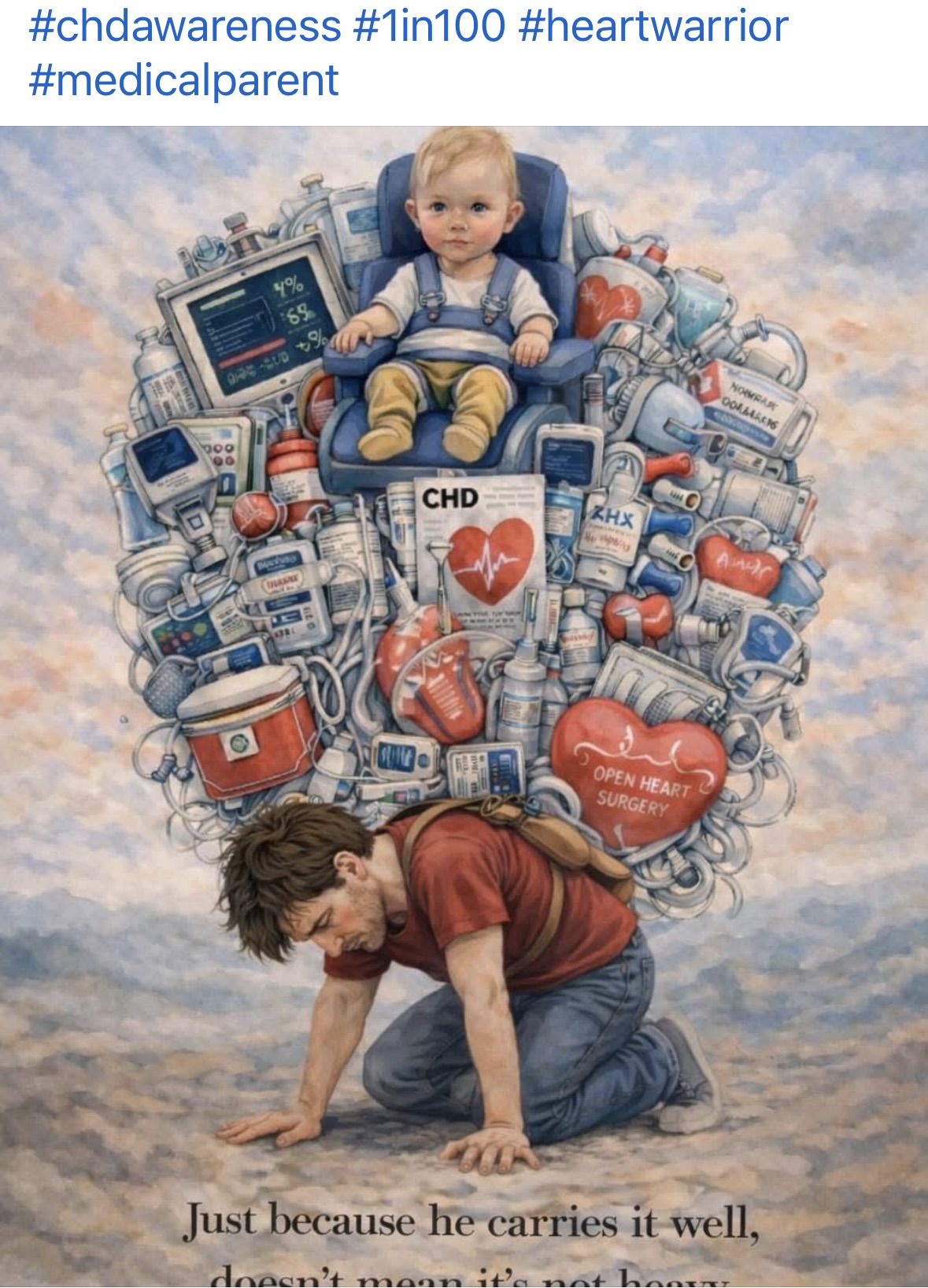
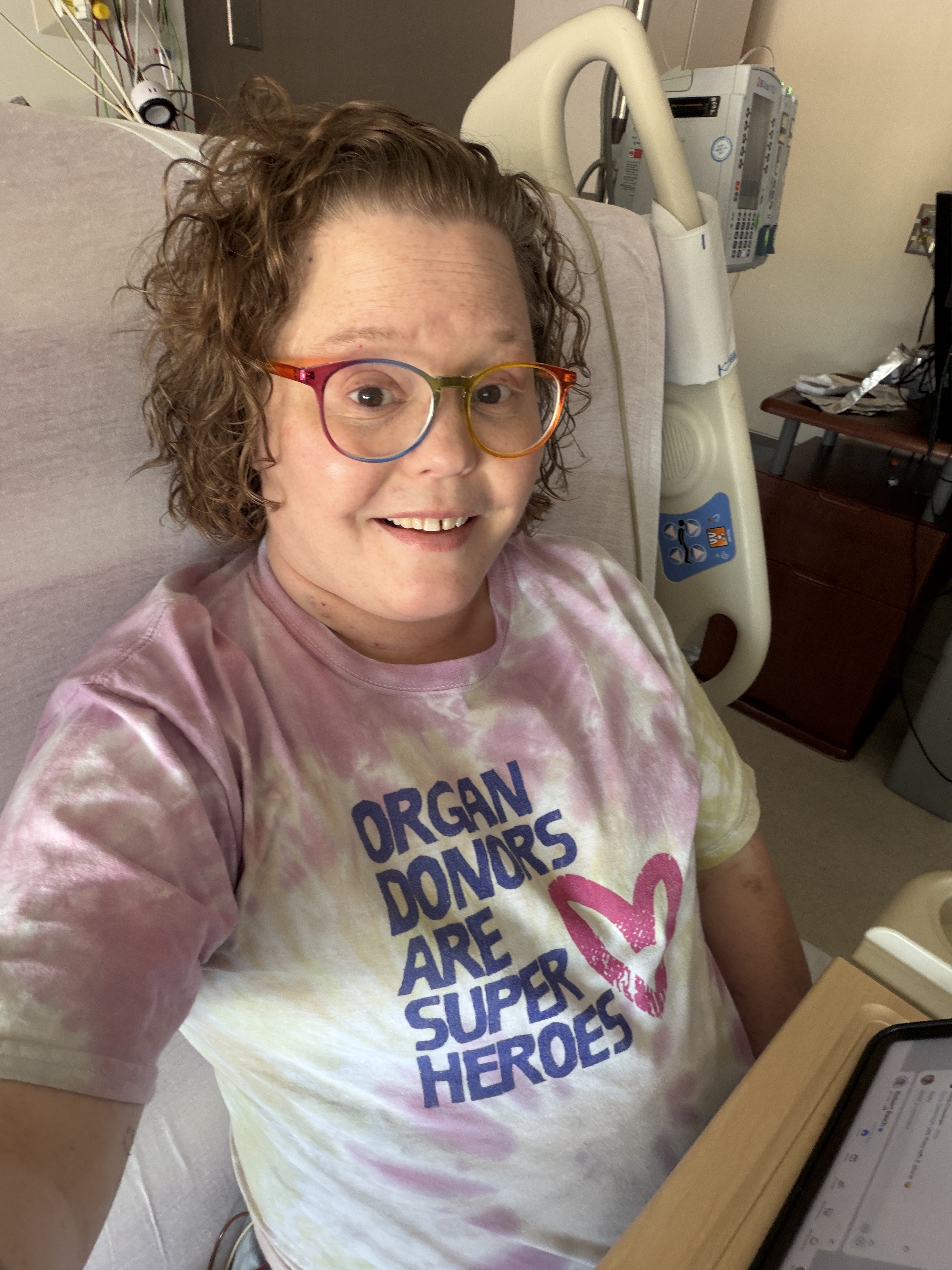
CHD is who I was. It is part of how I was born. It brought me struggles and growth; it gave me a community and set me apart. Now I am a heart transplant recipient. Everything is new. A new community, new struggles, new places to grow, new ways to be set apart. A whole new identity. A whole new playbook.
But just because I am now a transplant recipient doesn’t mean I am no longer part of the CHD community. I spent 44 years with a CHD heart and all that entails. CHD was boot camp. It prepared me for transplant life. It taught me everything I know about managing complex medical issues. It shaped my personality, my outlook—my whole life, really.
And though I know my CHD life will always be part of me, there is grief in knowing that, in many ways, that part of my life is over.
I took a lot of pride in living with something that was truly difficult, and in never knowing any different. There was pride in pushing through every difficult day in pursuit of as much normal as I could get, for as long as I could get it.
Moving forward with transplant evaluation and listing was incredibly challenging because I knew it was the first step away from my CHD identity. In a lot of ways, it felt like a betrayal of the kid who fought through it all, even when it was scary.
Laugh if you want, but transplant felt, in a lot of ways, like the “easy” way out.
As a kid, I didn’t really know how to BE a kid with CHD, so a lot of the time, I just wasn’t. I didn’t talk about it much (unless I was in gym class), and when someone asked about my scars, I more than once gave a crazy answer like, “I fell on an axe.”
How does a second grader explain complex congenital heart disease to another second grader?
They don’t.
They tell them they fell on an axe and hope someone changes the subject.
I didn’t want to be seen as different, and I think a lot of the time I succeeded. I didn’t do sports, and I made sure I didn’t give people many chances to spot the differences.
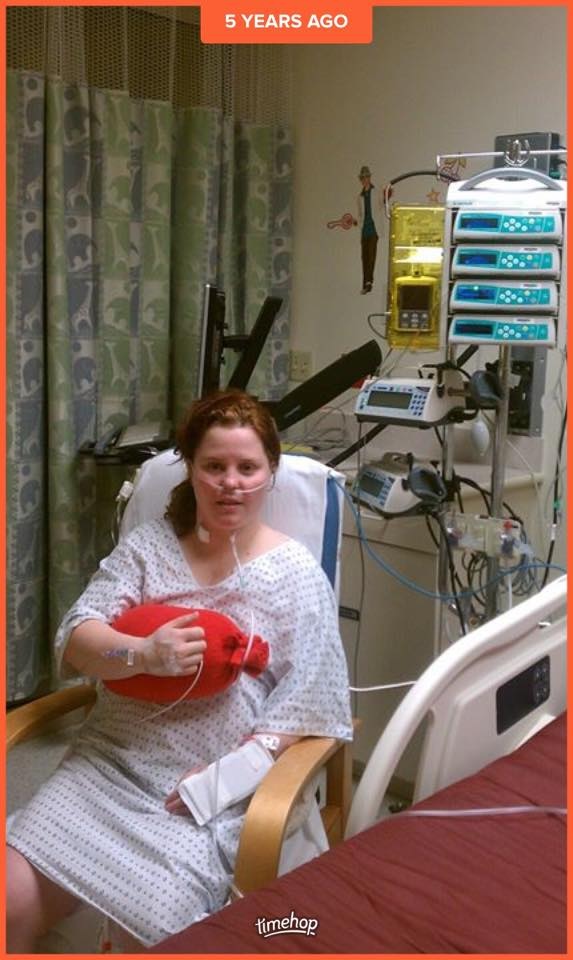
In my teens, the cracks started to show. Things changed as my body changed, and soon enough I was symptomatic and spending my summers in hospitals, getting treatments and having procedures to stabilize heart rhythm issues. There were new limits, new meds, new scars, and, if I am honest, a new chip on my shoulder about this long-dormant issue that was rearing its head.
The hardest part of that time was not knowing ANYONE like me and truly believing I was not long for the world.
I had no proof that life was possible. And if I’m honest, a lot of the doctors I saw weren’t super helpful in dissuading that belief. Many talked about how amazing it was that I was still alive at all. Others wanted to try experimental surgeries that had never succeeded but, according to them, the deaths weren’t a result of the surgery.
I may have told one doctor, “Unless they were all hit by trucks, I think the surgery had something to do with it.”
I do stand by that, but perhaps it was sharper than it needed to be.
I give that scared teenager some grace, and I hope that doctor didn’t take my words to heart. I am friends with more than one cardiologist these days, and I can’t imagine anyone saying that kind of thing to one of them.
And I know those cardiologists because I longed so desperately for a community I could relate to.
As a young adult, I went looking for one and found a local support group. There I met a man named Jason. He and I got on like a house on fire, and one day he told me about a camp in St. Louis for kids with congenital heart disease.
As it happened, I was out of work and had the time to go, so we sent in applications, not knowing how much the camp needed—and wanted—the help of adults with CHD.
Sadly, before we could make the trip together, Jason died suddenly from complications of his CHD.
I was crushed.
My first friend in the CHD community, and this is what happened?
Perhaps seeking out this particular community had been a bad idea. After all, I was looking for hope that I would live, not confirmation that I could die.
When I called Becca, the camp director, to tell her Jason had passed and that she would need to fill two counselor spots, she encouraged me to come anyway. I think she sensed my deep grief and knew I was ready to walk away from a community she understood could be incredibly impactful for me.
I agreed to go, but the whole way there I considered turning around. Even after I arrived, there were moments when I thought about leaving before the kids showed up.
But Becca and the whole staff made sure I felt welcome. They gave me a lot of love and encouragement. And by the end of camp—camp working how it does—I had a whole new family in the CHD community: kids, adults, doctors, nurses, and other specialists who were entrenched in this world I hadn’t even really known existed.
There are more kids with transplants who go to camp than I can count, and they are still considered CHD kids.
So I suppose I am too.
Maybe I just have a new addendum at the end:
Congenital Heart Disease, D-TGA, VSD, ASD, post-transplant.
That seems right.
So, do I still have congenital heart disease?
Maybe “have” isn’t quite the right word anymore. But 44 years of CHD didn’t disappear when my old heart did. It is in the kid who learned how to hide her differences, the teenager who wondered whether she had a future, the scared young adult who went looking for people like her, and the community that eventually became family.
Now there is another piece to add.
My identity, like everyone’s, is still evolving. There will probably be days when it feels clear and days when it feels convoluted. I’m still figuring out what it means to be a transplant recipient and how that new identity fits alongside everything that came before it.
Maybe I haven’t left my CHD identity behind.
Maybe I just added another comma.
Maybe I am just a little more.